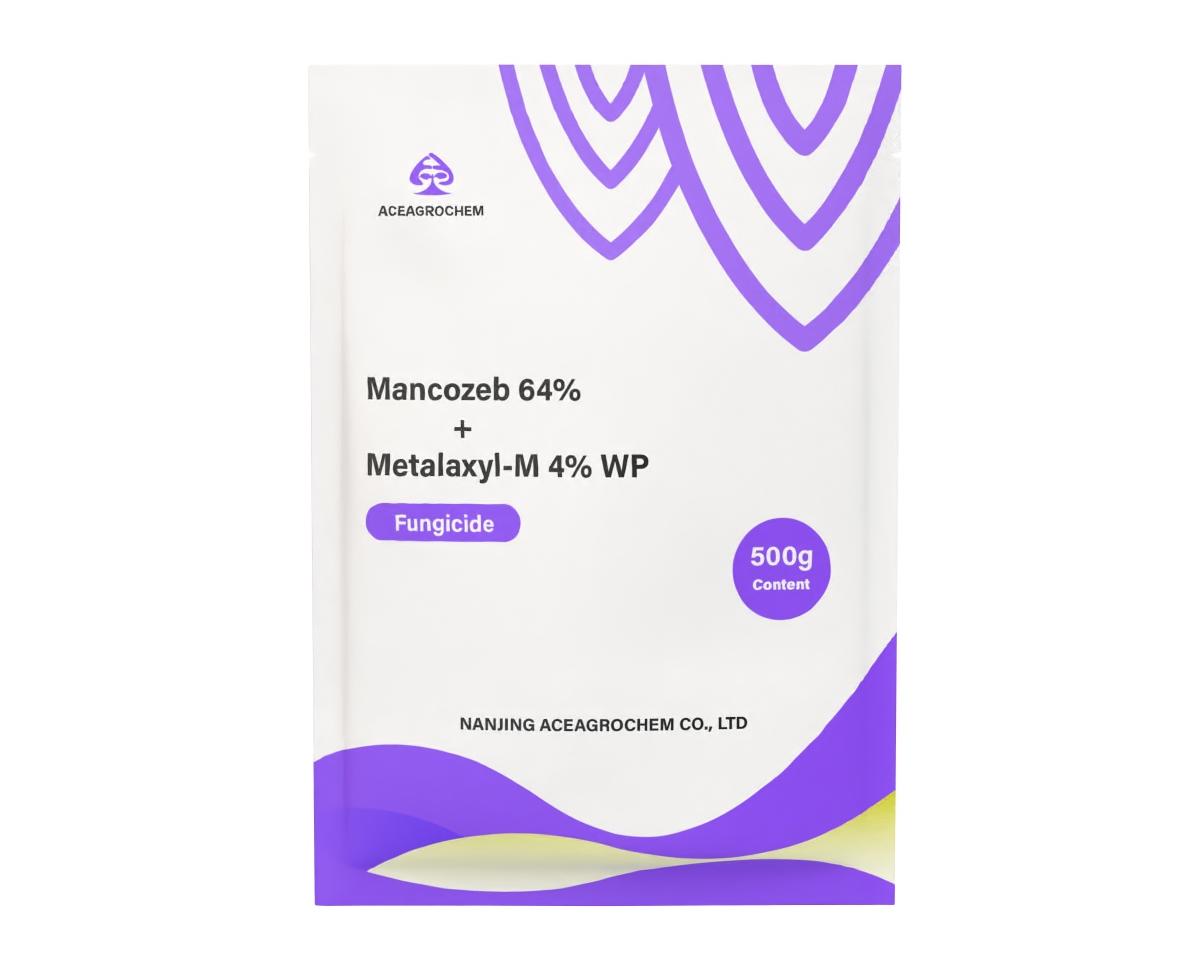
Mancozeb 64% + Metalaxyl-M 4% WP
Classification:
Fungicide
Formulation:
Mancozeb 64% + Metalaxyl-M 4% WP (Wettable Powder)
CAS NO:
Mancozeb: 8018-01-7;
Metalaxyl-M: 70630-17-0
USAGE:
A broad-spectrum fungicide for controlling various fungal diseases in a wide
range of crops such as potatoes, tomatoes, grapes, and fruits. Effective against
diseases like downy mildew, late blight, and early blight.
Pack size:
100g, 500g, 1kg/bag, or as required
Direction for Use
| Crop | Target Diseases | Dosage (64% Mancozeb + 4% Metalaxyl-M WP) | Application Timing | Remarks |
|---|---|---|---|---|
| Potatoes | Late blight | 2000-3000 g/ha | Before the appearance of disease symptoms or at the early stage of infection | 1) REI: 5 days 2) Max 3 applications/season |
| Tomatoes | Early blight, Late blight | 1500-2500 g/ha | When the weather is conducive to disease development | 1) REI: 3 days 2) Max 4 applications/season |
| Grapes | Downy mildew | 1000-2000 g/ha | Before the onset of disease or during the early growth stage | 1) PHI: 14 days 2) Ensure thorough coverage of foliage |
| Fruits | Leaf spot diseases | 1200-2200 g/ha | Regular intervals during the growing season | 1) REI: 7 days 2) Do not apply during flowering |
Product Details
Mode of Action:
-Mancozeb acts by preventing the germination of fungal spores by releasing
manganese and zinc ions, which inhibit certain enzymes in the fungal cell.
-Metalaxyl-M is a systemic fungicide that is absorbed by the plant and
translocated to the growing points, inhibiting the synthesis of ribonucleic acid
(RNA) in the fungus.
Benefits:
-Broad-spectrum activity against multiple fungal diseases.
-Combination of contact and systemic action for better disease control.
-Rainfastness to some extent after drying on the foliage.
-Can be used in integrated pest management programs.
Precautions:
-PPE: Wear chemical-resistant gloves, a respirator, and goggles.
-Do not apply during heavy rain or when the temperature exceeds 35°C.
-Do not mix with alkaline Pesticide.
-Storage: Store in a cool, dry place away from direct sunlight at 0°C to 30°C.
Environmental Hazards:
-Toxic to aquatic organisms, avoid contamination of water bodies.
-Low toxicity to birds and mammals.
-Degradable in soil under normal environmental conditions.